










































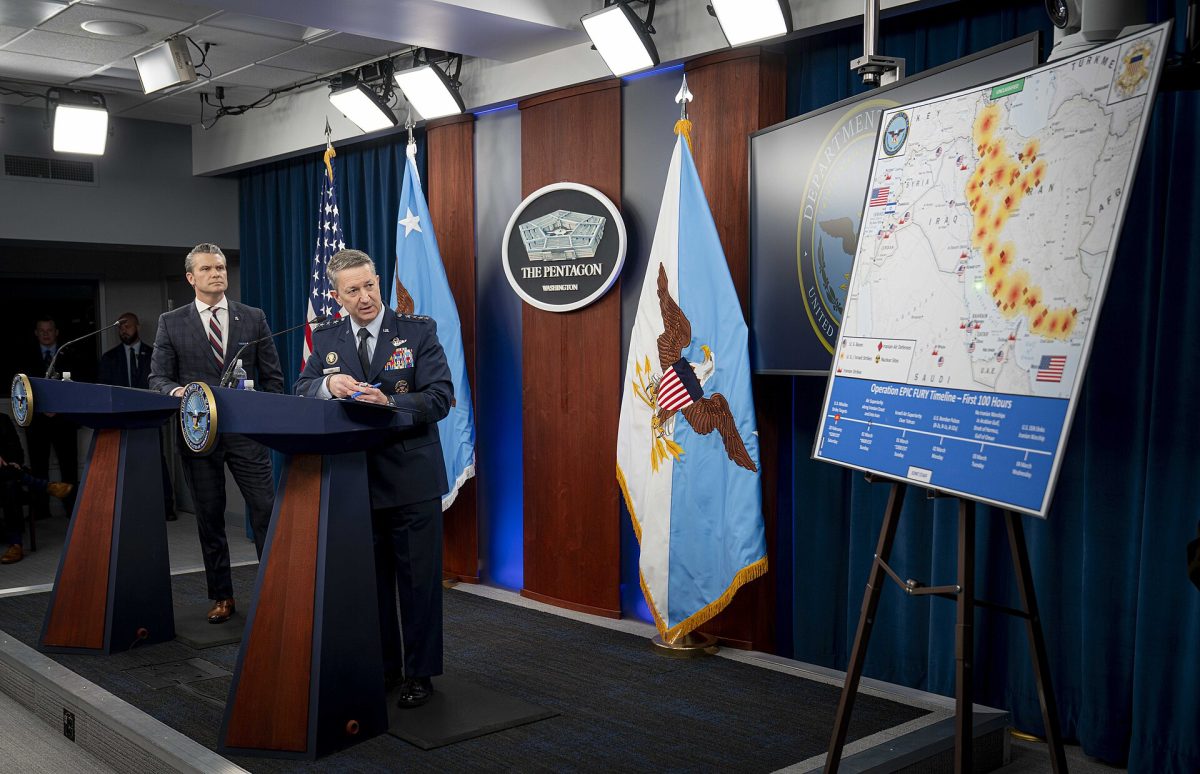
The United States’ entry into war with Iran in early 2026 followed years of tension, but escalated quickly under Donald Trump, raising immediate concerns not just about strategy, but about legality and oversight.
The conflict began on February 28, 2026, when U.S. and Israeli forces launched major airstrikes on Iranian military targets. Iran responded with missiles and drone attacks on U.S. forces and allied locations, rapidly escalating the confrontation into a wider regional conflict.
In response to fighting that affected multiple countries and disrupted the strategic Strait of Hormuz, a key global oil shipping route, negotiators brokered a two-week ceasefire that took effect on April 8, 2026. The agreement was announced by U.S. leaders as a way to pause hostilities, ease regional pressure, and potentially lead to longer negotiations. The ceasefire was intended to allow safe passage through Hormuz and a reduction in missile exchanges.
However, within hours of the ceasefire beginning, the truce began to break down. On April 8, 2026, Israel conducted heavy airstrikes in Lebanon targeting Hezbollah positions. These strikes resulted in significant destruction and a reported high number of casualties, including civilians, particularly in and around Beirut.
Iran and its representatives condemned the strikes, saying they violated the terms of the ceasefire and undermined any possibility of sustained peace. Following these attacks, Iran signaled that negotiations might collapse and suggested it could reimpose restrictions on shipping through the Strait of Hormuz
Israeli Prime Minister Benjamin Netanyahu stated publicly that the ceasefire did not apply to military action in Lebanon, a position that complicated efforts to hold the truce.
As of April 9, 2026, the ceasefire is widely considered to be in jeopardy, with continued strikes and diplomatic tension. Iranian officials have strongly criticized the U.S. and Israel, while U.S. leaders have insisted they will maintain military forces in the region until Tehran complies with terms they deem necessary.
Despite the scale of the conflict, Congress has not passed new legislation formally authorizing the war. Debates of limits on presidential war powers have surfaced, but have not led to binding restrictions. Lawmakers from both parties have expressed concern, yet no major action has been taken to require explicit congressional approval for further military operations against Iran.
Critics argue this reflects a breakdown in constitutional oversight. Supporters contend that existing authorizations and national security imperatives justify continued action without new legislation.
Reports from independent observers and human rights groups indicate that civilian areas in Iran and Lebanon have suffered significant damage. Hospitals, residential districts, and infrastructure have been hit during strikes, prompting calls from advocacy groups for protection of non-combatants and renewed diplomatic efforts to stop the fighting.
International actors, including some European Allies, have expressed concern about the conflict’s direction and the failure of the ceasefire to hold. Many contend that without diplomacy and oversight, the conflict could widen, possibly with serious humanitarian and economic consequences.
SOURCES:
https://www.reuters.com/world/asia-pacific/us-iran-ceasefire-what-we-know-2026-04-08/
https://www.washingtonpost.com/world/2026/04/08/israel-strikes-beirut-lebanon-iran-ceasefire/
https://css.washingtonpost.com/world/2026/04/08/trump-iran-war-ceasefire-israel/
https://www.aljazeera.com/news/2026/4/8/netanyahu-says-us-iran-ceasefire-does-not-include-lebanon