






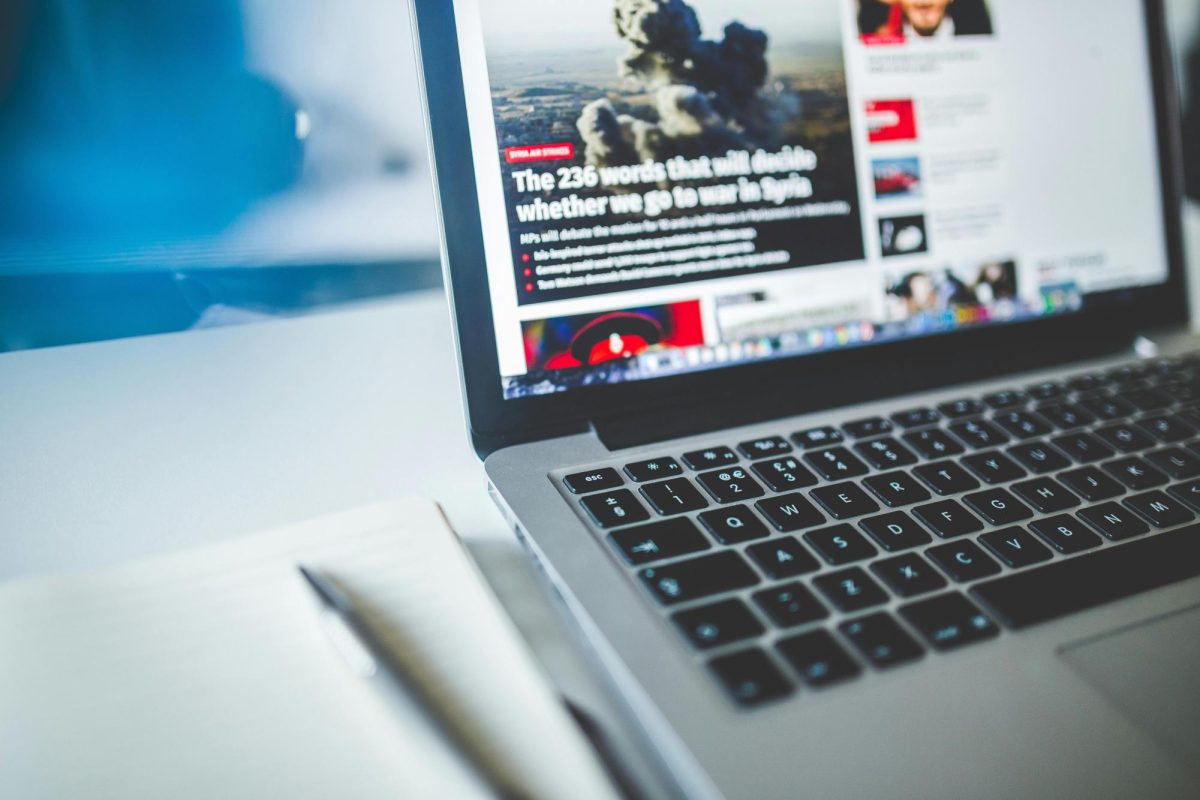




















News reporters have been feeding people biased information under the radar for years, and it’s only gotten worse recently. Many news outlets and journalists write or report with bias. They tell one-sided stories with clear “good” and “evil” distinctions, or they will write about their opinions on certain issues, which are not always based on facts. Furthermore, most people can’t tell the difference between facts and bias, which leads to consumers being unknowingly influenced. Journalists, both print and broadcast, should be obligated to report without bias to avoid consumer misinterpretation and let people make their own conclusions.
Journalism is often skewed in the way that it shows only one side of an issue because of inherent bias. Some reporters merely write what they think people want to hear, and some are outwardly pushing an agenda. The immigration debate and its news coverage is a great example of this. When immigration comes up, the argument often is about the immigrants themselves, how they are “criminals” and “aliens”. This is all because of reporter bias. According to the ACLU (the American Civil Liberties Union), millions of dollars are spent on ads about the border. They wrote that “more than a third of the hundreds of ads included depictions of Border Patrol agents, soldiers, or the military, which contribute to the false idea of a militarized ‘battle zone’ at the border” (Joshi). This is clearly opinionated reporting within the news. Instead of showing the struggling people who are crossing the border, the immigration issue is shown as equivalent to a war. Furthermore, the ACLU shows how many articles concerning immigrants use harsh language to describe the people, like “illegals” or “traffickers”. Labeling people like this leaves no room for readers of these articles to believe immigrants are human. Moreover, this is the spread of false information. Very few immigrants are traffickers, and, as mentioned before, they are human, not aliens. The bias towards the immigration debate and other similar issues is spreading misinformation and trying to push false narratives. This is hurting both the immigrants involved – who face more prejudice every day – and the people watching the news, causing them to continue to spread and warp information. It is said that opinionated pieces can enhance understanding for a reader by giving them context and explaining deeper. This can be true at certain times. However, many news sources will take opinionated writing too far, and, as stated before, start putting out false messages. Biased writing is dangerous, and all official news outlets and reporters should be obligated to write impartially.
In the present day, many people don’t have trust in the news. Many consumers can either clearly see they’re being given false information, or they can sometimes tell when a certain belief is being highlighted over another. A lot of news outlets do cater to a particular set of beliefs and values. This usually comes in the form of reporters being Democratic or Republican. Outlets like Fox News are clearly conservative, while channels like ABC or The New York Times are obviously liberal. According to the Pew Research Center, Republicans and Democrats stick to their outlets and don’t usually watch channels leaning the other way. Also, there are differences in personal opinion about the news within the two parties. After doing a poll during the 2024 Election, the Pew Research Center found that “Republicans are much more likely than Democrats and Democratic leaners to say they have seen inaccurate coverage…” (Shearer et al.). This shows that there is bias in the news because Republicans believe they aren’t seeing facts and/or representation from their point of view. However, many Democrats also reported that they don’t trust the news. In fact, 73 percent of all the people in a survey said that they had seen inaccurate election coverage (Shearer et al.). Elections and just about anything to do with politics come with a ton of bias and strong opinions. With this in mind, it is clear to see that journalists and reporters aren’t filtering out their own opinions but putting them out for everyone to see, even going so far as to put their own parties’ unproven theories out as factual information. Some people might argue that limiting the press to reporting without bias would go against the First Amendment, or freedom of the press. Then again, it is important to consider what is more important: well-informed and educated people, or strict adherence to the First Amendment. In the world today, misinformation and bias spreads division and intense rivalries between people, like Democrats and Republicans. This leads to many of the massive political conflicts in the US. The Carolina Journal says, “Journalism is about helping people understand and interpret the world around them, challenging power, and clarifying the truth so it’s not manipulated or simply lost in the noise” (“The future of journalism in an era of misinformation”). As can be seen, news outlets are not helping people understand, but causing more concern and confusion. Therefore, journalists should be required to report without bias.
Telling the difference between what is opinion and what are facts is an important skill to have in the present day. Sorting through the vast amount of information on the internet and social media platforms to determine the truth is crucial to living in today’s society. However, this isn’t as easy as it seems. An article by the George W. Bush Presidential Center reported on a study by the Pew Research Center, which focused on a person’s ability to tell factual statements from opinionated ones. The study wrote that “…most Americans performed only slightly better than they would have making random guesses… What’s more, ‘sizable portions got most wrong’” (“Distinguishing news from opinion can help strengthen trust in the media”). Specifically, out of five factual and five opinion statements, 28 percent of people got two or less of the factual statements correct. With all of this in mind, it is clear most people can’t tell the distinction between fact and opinion. People are often easily convinced by what they see, and so are unknowingly influenced to think a certain way. Some people may say that the news is still trustworthy enough to watch, and, in some cases, that is true. Not all sources of news are biased or untrustworthy. The problem is that most of them can’t be relied on for unbiased news. In 1949, a policy called the Fairness Doctrine was created. The document required all news broadcasters to report every side of a story. This was eventually repealed in 1987, and although it had its flaws, people were more often able to trust in the information they were getting. Now, when assurance in the news is so low, the US needs something like the Fairness Doctrine back. According to the UC Law Repository, “an appreciable number of people of various political affiliations now want the Fairness Doctrine back in some form”(Klein). Something similar to the Fairness Doctrine needs to come back to reassure the people’s trust in the news. All in all, biased reporting is dangerous due to unclear distinctions between fact and belief, so journalists should be solely giving out true, nonpartisan information.
Journalism, in every form, should be written without any kind of bias. Misinformation is dangerous, and trusting in the news is important for the people of the world, so they are well-informed. While it is hard to write anything entirely without bias (people’s race, gender, and economic class all affect opinions), it is necessary to keep personal beliefs out of official news coverage so people can be most effectively and efficiently informed. Leave false news to influencers and start trusting in journalism again.